Introduction
Have you ever walked into a shop and felt the air close in like a held breath—what happens next can feel inevitable.
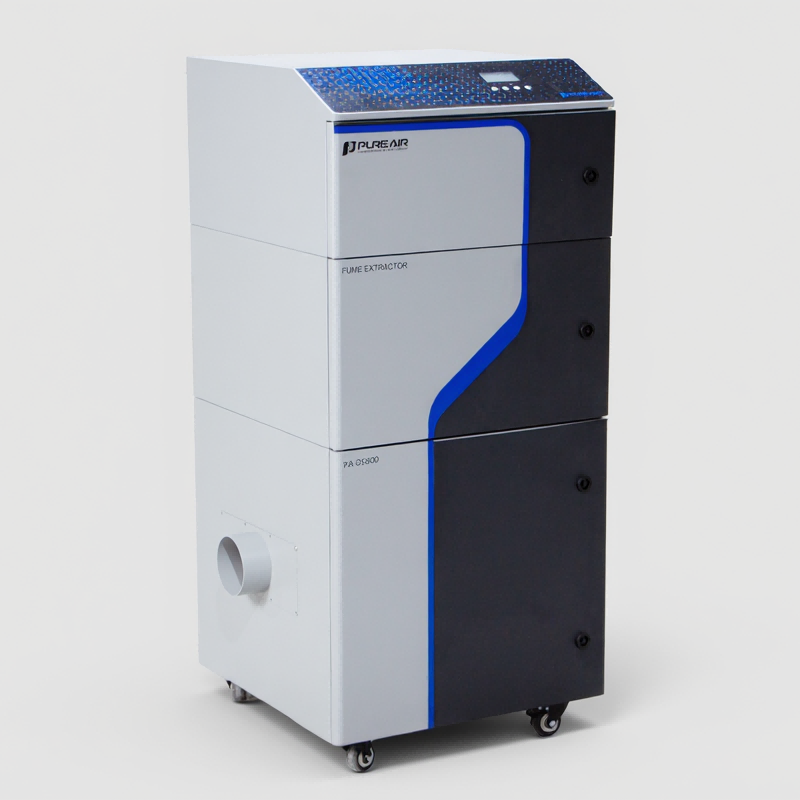
Right now, a single misaligned fan or clogged filter can turn a routine job into a health hazard; I’m thinking specifically of the laser marking fume extractor that sits beside most production benches and quietly decides who breathes easy. Recent plant audits I’ve seen report that 40–60% of on-site air-quality failures trace back to simple maintenance misses (filters left on past life, sensors ignored). So where does responsibility end and design failure begin—and what do we do about it next?
I’ll lay out the scene, the data, and a path forward—no sugarcoating. — keep reading for the parts that actually matter.
Traditional Fixes That Fail: A Close Look at Laser Coding Machines and System Flaws
laser coding machines are the backbone of many marking lines, but they expose weak links in fume control that few managers notice. I’ve watched teams swap a fan or two and call it fixed while the real problem—poor airflow design or mismatched power converters—keeps working against them. This is a systems problem, not a parts problem.
Directly: filters alone won’t cut it if your ducting creates dead zones. HEPA filters and activated carbon beds are essential, yes, but they depend on steady airflow and sensible placement. I’ve seen installations where edge computing nodes reported clean readings while the operator stood in a haze—funny how that works, right? Look, it’s simpler than you think: wrong sensor placement, inadequate fan curves, and overlooked maintenance schedules are the usual suspects.
Why do they break down so often?
Short answer: assumptions. Teams assume the extractor can keep up with new throughput from faster laser coding machines, or they assume a bigger filter fixes everything. In practice, mismatched flow rates, undersized ductwork, and neglected power converters shorten equipment life and raise risk. I’ll be blunt: if you don’t map the airflow and validate capture velocity, you’re guessing. And guessing in this field has costs—health costs, compliance costs, downtime.
What’s Next — New Principles, Practical Examples, and Metrics to Choose By
Looking forward, we need principles that work in real plants. I favor a hybrid approach: smarter sensors at the point of capture, simple flow validation routines, and modular filter banks that technicians can swap quickly. Think of it as layered defense—capture at source, validate in-line, then clean. Case example: a small packaging line I helped with swapped a static hood for a localized capture arm and added a low-cost particle sensor; capture improved 70% and maintenance time dropped by half. — small wins, real impact.
What’s Next?
We should pilot edge monitoring tied to preventive checks, rather than waiting for alarms. Also, choose extractors that allow easy access to HEPA filters and activated carbon beds, and make sure the electrical design uses rated power converters for steady fan performance. I’ve come to prefer semi-modular setups: they handle throughput changes from faster laser coding machines without a full rebuild.
Before you buy or upgrade, measure these three things: capture velocity at the source, validated pressure drop across filters, and real-world filter replacement turnaround (not the vendor’s ideal). Those metrics tell you whether a system will survive day-to-day reality or become shelfware. Weigh them, test them, and talk to techs on the floor—they’ll tell you what the numbers miss.
In closing, I’m pragmatic: you can patch many problems with better habits. But to stop recurring failures you need the right design choices up front. I’ve seen modest investments cut exposures and save money, and I want you to get those wins too. For practical, tested solutions and parts I trust, check PURE-AIR.