A Comparative Lens on AMR Controllers: The Stakes and the Gaps
Define the core first: the “brain” that turns intent into motion, and motion into safe, repeatable work. An amr controller is that brain, coordinating sensors, motors, safety, and fleet timing in real space and real time. Picture a high-volume warehouse at dawn, docks buzzing, and aisles tight; one queue stalls, three others ripple. Data tells the same story: add 200 milliseconds of jitter during peak paths and you can shave 8–12% off daily throughput. The question is simple, yet pressing: why do some fleets glide while others grind?

In comparative terms, the gaps are not just about raw compute. They stem from how control loops, SLAM updates, and safety signals ride the network under load. Edge computing nodes do heavy math, but the loop still depends on stable timing across CAN bus and deterministic links (and still meeting safety rules). If a safety PLC waits on a crowded fieldbus, brakes release late. If sensor fusion misses one tick, localization drifts. The public wants efficiency; the line lead wants predictability; both want it now — without drama. So, let us weigh what legacy stacks promise against what modern designs deliver, and why that difference matters next.
Where the Old Playbook Breaks: Hidden Costs in Control
Why do legacy stacks fail?
Teams often assemble a robot control system from a PLC here, a microcontroller there, and a patch of scripts in between. It works—until it doesn’t. The control loop crosses a fieldbus, hops a gateway, and lands in a timing mismatch. Power converters inject noise, so IMU readings wobble. CAN bus is fine for many tasks, yet its bursts can collide with safety handshakes if QoS is not enforced. A mixed RTOS and Linux stack may add latency at the worst moment. Look, it’s simpler than you think: every hop and shim adds uncertainty — funny how that works, right?
Traditional layouts hide two traps. First, bottlenecks. The safety PLC depends on a crowded network path; under stress, the stop command arrives late by a few frames. Second, upkeep. Without OTA updates and version pinning, the fleet drifts. One bot runs new mapping nodes; another holds old ROS middleware bridges; both behave “almost” the same, which is worse than different. Debugging turns into archaeology. Even when edge computing nodes help with perception, the control loop still chokes if QoS, jitter budgets, and deterministic scheduling are not designed end to end. This is why “works in the lab” fails in the loading bay.
From Patchwork to Principles: The Road Ahead
What’s Next
The answer is principle over parts. A unified robot control system treats timing as a first-class feature, not an afterthought. Start with deterministic Ethernet (TSN) or equivalent guarantees, set strict budgets for control-loop latency, and bind safety paths to independent channels. Co-locate motion planning with sensor fusion when possible, but keep the safety core isolated on a certified module. Pair an RTOS for hard real-time with a Linux space for orchestration via containers. Then enforce fleet-wide QoS and versioning. You get predictable actuation, clean SLAM updates, and fast safe-stop—under load, in the real world. Small changes in architecture, big gains in trust.
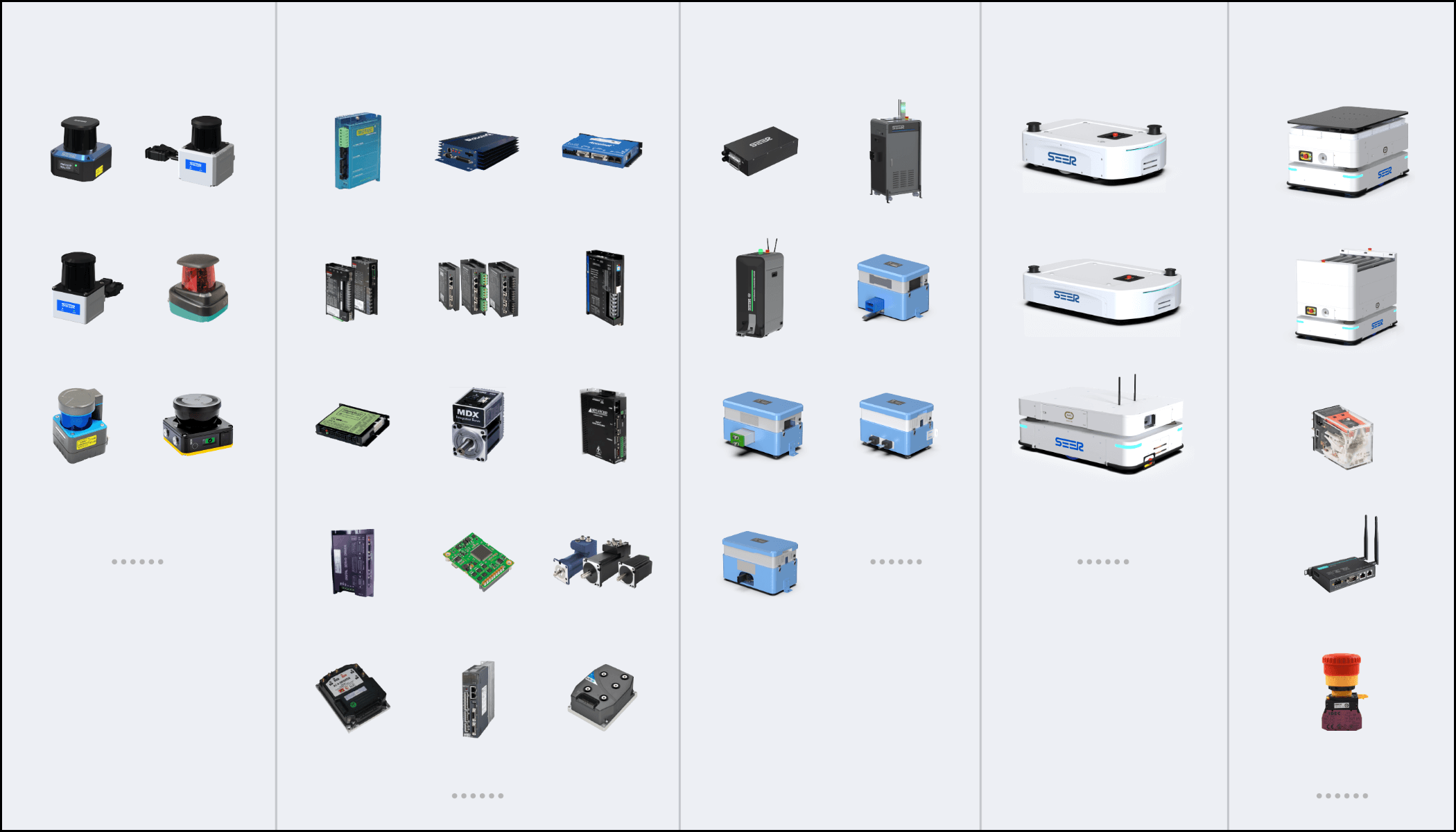
Looking forward, three shifts define resilience. First, observability: high-rate telemetry with 99.9th percentile latency tracking, not just averages. Second, adaptability: OTA updates with staged rollout and automatic rollback, so fixes move at the speed of risk. Third, autonomy at the edge: localized planners that degrade gracefully when links falter—no heroics, just design. Advisory close: 1) Measure end-to-end control-loop latency under load, including jitter tails; 2) Verify safety response time to stops and faults per ISO 3691-4, across worst-case traffic; 3) Audit lifecycle tooling—OTA, versioned configs, and fleet-wide telemetry coverage. Get these right, and the rest follows—quietly, reliably, almost boring, which is exactly what you want. Learn more with SEER Robotics.